
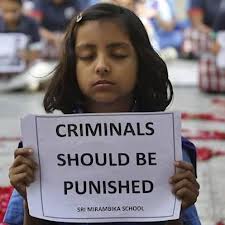
I was reading this morning about the 23 year old rape victim called ‘Damini” who succumbed on December 29th because of a brutal, violent sexual assault at the hands of 6 men who ganged raped her and beat her with an iron rod. The atrocity of this crime is hardly thinkable, yet I must, as well as our society must, force ourselves to get close to it so that the world, the community, our conversations, our relationships are impacted and transformed by this savagery. Furthermore, we must also get close enough to it to take a substantively and excruciatingly critical inventory and analysis of just what in our world leads to such horrific acts.
There seems to be a marked increase in reports of violence over the past month in the US. In reviewing these news reports, there is a comment that I’ve read posted by readers and often heard in our conversations that I want to address which I hope will aid in clarifying our remedy.
Comment: “THEY ARE ANIMALS”
I’ve read the comment that in the case of the 6 rapist “these animals should be…” or in reference to Adam Lanza “that animal.” While I certainly identify with people’s need to excoriate perpetrators of violence and hold them up as villains, I think the use of the term of animals to refer to attackers or violent criminals draws us away from solutions and conversations we need to have.
I think people use the term animal to express ultimate disdain for the act of violence, and I argue that violence is indeed an animalistic act, a savage and brutal exercise. However, what cannot be lost in the framing of acts of violence is that these are HUMANS doing violence, not animals. And that’s what REALLY makes it wrong because we expect animals to behave violently, but we don’t expect that behavior of human beings. I think the use of the term animal instead of human leads to our disconnection from the truth and the horror that we must confront.
That it is a person attacking another human…not some impersonal “it”.
We are disconnected from the viewpoint that this is someone’s son/daughter, mother/father, brother/sister, friend, coworker, neighbor…They are real people, not separate from us, but connected to us. When we place them in that “box” over there (calling them animals/other than human), then we indirectly create subtle exceptions for their behavior which makes us less liable and less likely to scrutinize our individual role and the role of our culture and community in the transformation of a young 9 year old boy at the park playing basketball with his friends into a 27 year old rapist. What is it that takes a young Adam and enables him into a human death machine against the most vulnerable?
Making him “other” than human implies that the issue of violence is something exclusive to the individual, when violence is a humanity and communal issue; in fact, violence is essentially a relational issue.
It’s an issue of how we treat one another; the injustice that is both legislated and normative in our culture; the distinctions that we make between our sons and daughters as children that results in oppressive men and oppressed women; the lack of tolerance and acceptance we promote for people different than ourselves; the inequity of resources in communities of people with darker skin; the rugged individualism we emphasize so deeply in our culture that drives people into dark places to survive and they in turn take generations into those dark places with them in their trek into surviving the isolation; the lack of respect that we have for ethnic groups, workers of certain vocations, the aged, people of different faiths, people with disabilities; the ostensible lack of care and courtesy that should be extended to our “neighbors” on the most ordinary of occasions. These conditions are not the issue of animals, these are the issues of humans.
I do not at all suggest the elimination of individual responsibility and accountability of the perpetrators of heinous acts of crime; however, I am adamantly opposed to approaches that do not confront behaviors and practices in our culture that may be responsible for converting humans into people with an animal nature and appetite. At the least, we understand every “animal” has a habitat from which it emerges.
We need to take a look at the habitat, the community, the niche from which violence emerges. We need to reflect on the notion that what makes an animal thoughtlessly violent is “the survival instinct”, and that perhaps in humans when that instinct is wrongly turned on by the culture, it leads to rage and violence. In what ways are we wrongly turning on the animalistic “survival instinct” in humans? How can we mute/disassemble that in one another?
In conclusion, I am asking that we REMAIN aware when we reflect on these disgusting acts of violence and decadence. They are not animals, they are humans and that’s what makes the situation UNBEARABLE. If it were an animal, I could accept it. It is not and therefore, I do not! And even if they have now become “animals” ,as some insist, they once were not. So the question becomes who or what is responsible for that conversion? What vampire-agent has turned their nature into a cold one? Only vampires make vampires. Only werewolfs make werewolfs. If they have become animals, they have been influenced by (a system of) animals. (I don’t refer only to their immediate socializing forces.)
When we forsake the issue of their humanity, we remove ourselves from the solution because the nature of an animal cannot be transformed, but at best tamed. Human beings, on the other hand, have capacity for transformation and transcendence.
Perhaps animals are limited by the survival instinct, but humans pivot upon love, belonging, and acceptance among other basic emotional needs.
Sometimes it’s difficult to know when the well-intentioned human has been bitten like a vampire and their nature converted into the animal. Is it possible that we get bitten by the violence vampire (see the photo below)…We call it justice. Or is it simply the animal “survival instinct” to kill or be killed.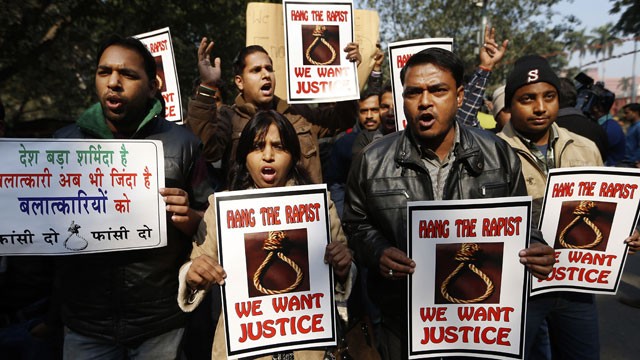
Hi min. Cory, This was an horrific story and truly animalistic nature was in effect. What caused it was a total disrepect of another humans right to choose what they wanted to happen to them. I liked the way you broke down what might of happened to them to make them the way they turned out to be. survial instinct had nothing to do with the brutal rape of that young woman but pure craving for selfish satisfaction indeed…I pray for the family of the lost victim.
Hi Mother Rhodes, I think you’ve made some very interesting observations, except I think it’s not so easy to dismiss the survival instinct. We have a general perception of survival instinct in the context of what we do to keep from “dying”, but you have to transfer that to a psychological framework. For example, when people disconnect from humanity (habitually deceitful, violent responses to conflict, fraudulent behaviors, emotional numbness, mistrust) that can be a symptom of the survival instinct; it’s not just a matter of bread, water, and physical safety.
Hi Min. Cory D. Bradely, I have received a little more clearence about transfering that survival instinct to a psychological reason. I think the disconnect from Humanity seems to be related to mental illness in the long run. There is no other way to see any other reason for such behavior.